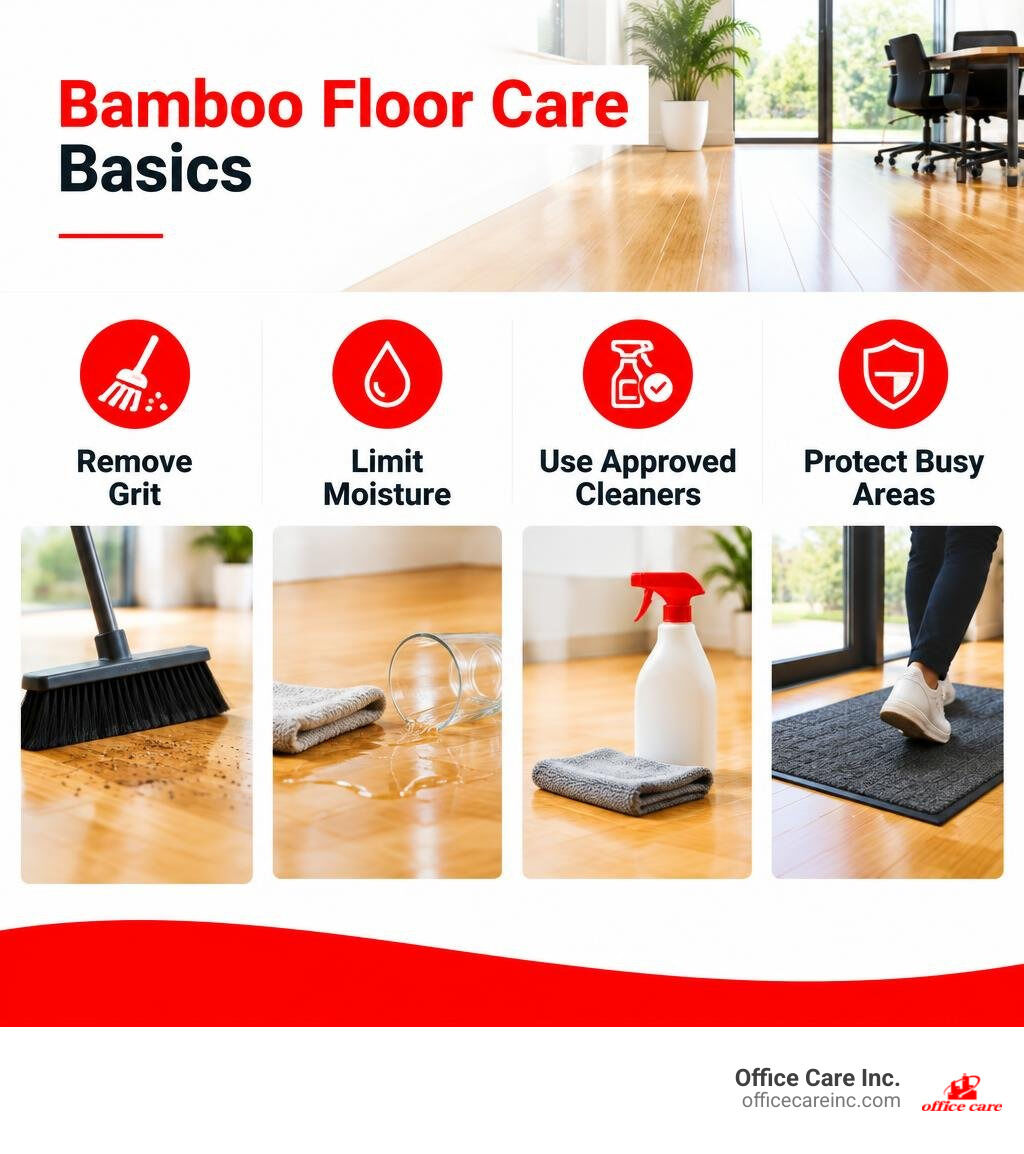
Good bamboo floor care starts with removing grit and limiting moisture. Sweep or dust-mop with microfiber each day, wipe spills right away, and use only a manufacturer-approved cleaner when the floor needs more than dry cleaning. If your floor's instructions allow mopping, use a barely damp pad and dry any wet spots at once. Skip steam mops, vinegar, and abrasive scrubbers.
In a busy facility, entry mats and felt pads also help protect the finish. Keep indoor humidity steady, and check the flooring maker's care instructions before using a new product.
I'm Richard Raj, owner of Office Care Inc., where I've led commercial cleaning programs across the DMV since 1997. My experience with floor care in busy facilities shapes this practical approach to bamboo floor care.
Bamboo is widely celebrated as an eco-friendly superstar in the flooring world. Because it is technically a fast-growing grass that reaches maturity in just 5 to 7 years—compared to over 20 years for traditional hardwood trees—it provides a durable and sustainable surface. In its natural strand-woven state, bamboo is exceptionally dense, often rated twice as hard as red oak.
Yet, despite its tough reputation, bamboo is vulnerable to its environment. Industry data reveals that 62% of bamboo flooring damage stems directly from incorrect cleaning practices. While a neglected floor might show signs of failure in just a few years, a well-maintained bamboo floor can easily last 20 to 50 years. Preserving your investment comes down to understanding the material's unique physical properties and establishing consistent care routines.
Essential Bamboo Floor Care Routines: Daily to Monthly Schedules
Fine grit acts like liquid sandpaper beneath shoes. Every step grinds microscopic dust particles into the protective topcoat, dulling the finish and creating tiny crevices where moisture can settle. Establishing a tiered maintenance schedule prevents dirt accumulation and keeps the surface spotless.
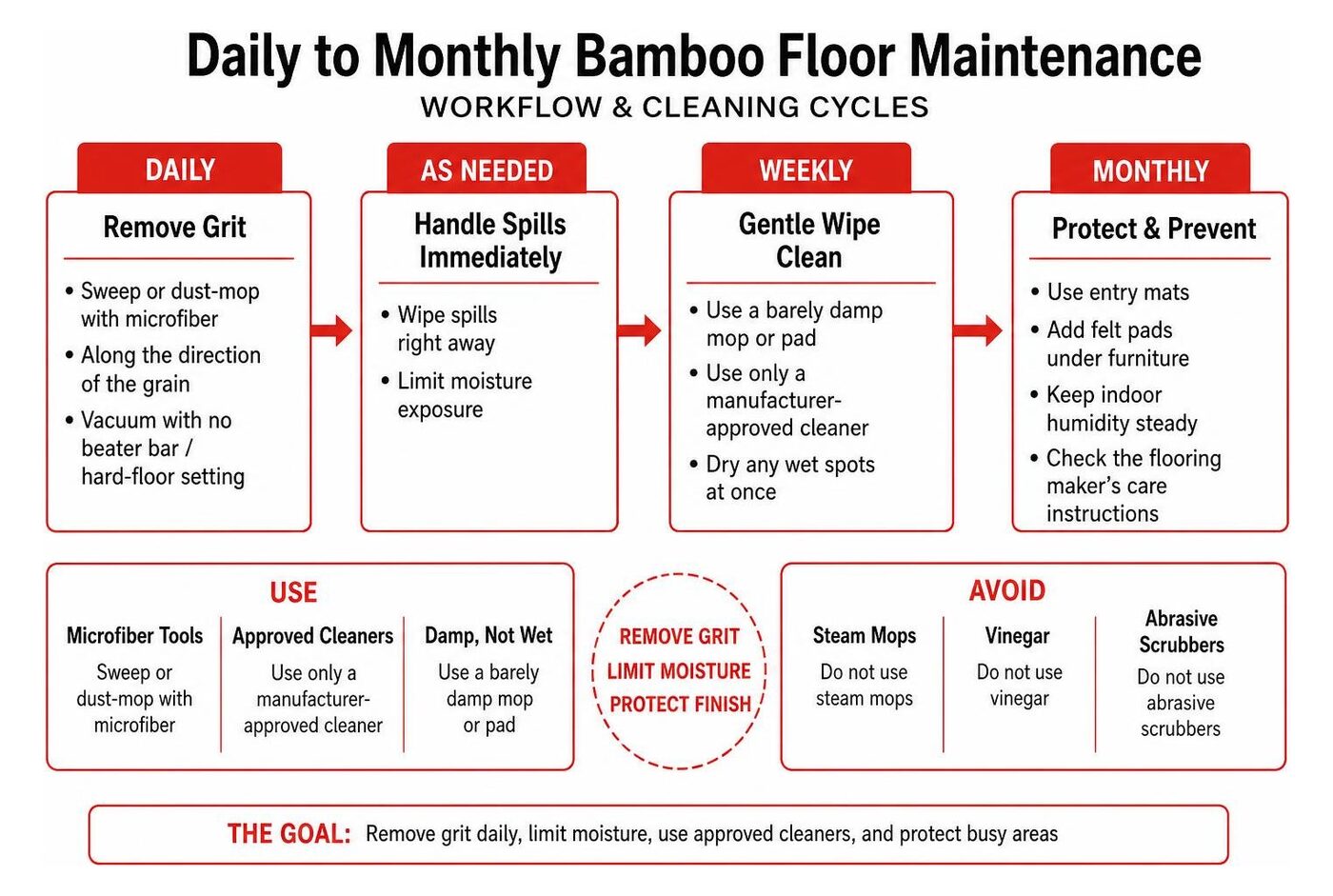
For everyday upkeep, sweeping or dry dust-mopping along the direction of the grain is essential. Always use a soft-bristle broom or a dedicated microfiber dust mop that uses static charge to capture fine soil. If you choose to vacuum, make sure to disengage the rotating beater bar or switch to a hard-floor setting to avoid gouging the planks. In commercial facilities and busy office settings, incorporating these habits into daily janitorial cleaning prevents premature wear patterns in high-traffic corridors.
The table below outlines the ideal schedule for preserving bamboo flooring across residential and commercial spaces:
| Frequency | Recommended Action | Primary Tools & Solutions | Key Goal |
|---|---|---|---|
| Daily | Dry sweeping or microfiber dust mopping | Soft-bristle broom, electrostatic microfiber mop | Remove surface grit and abrasive particles |
| As Needed | Immediate spill response and spot blotting | Absorbent white cloth, mild neutral spotter | Prevent liquid penetration and edge swelling |
| Weekly | Light damp cleaning | Barely damp microfiber pad, pH-neutral cleaner | Remove sticky residues without soaking planks |
| Monthly / Quarterly | Topcoat refreshing and targeted buffing | Specialized bamboo-safe polish, white buffer pad | Restore uniform sheen and protect high-wear paths |
| Semi-Annually | Deep joint inspection and barrier maintenance | Hygrometer check, mat washing, felt pad replacement | Ensure environmental stability and physical protection |
Proper Mopping Techniques to Avoid Moisture Damage
Standing water is bamboo's greatest enemy. Because bamboo planks are composed of compressed grass strips bonded with adhesives, excess water can seep between the seams, leading to permanent swelling, warping, and dark staining.
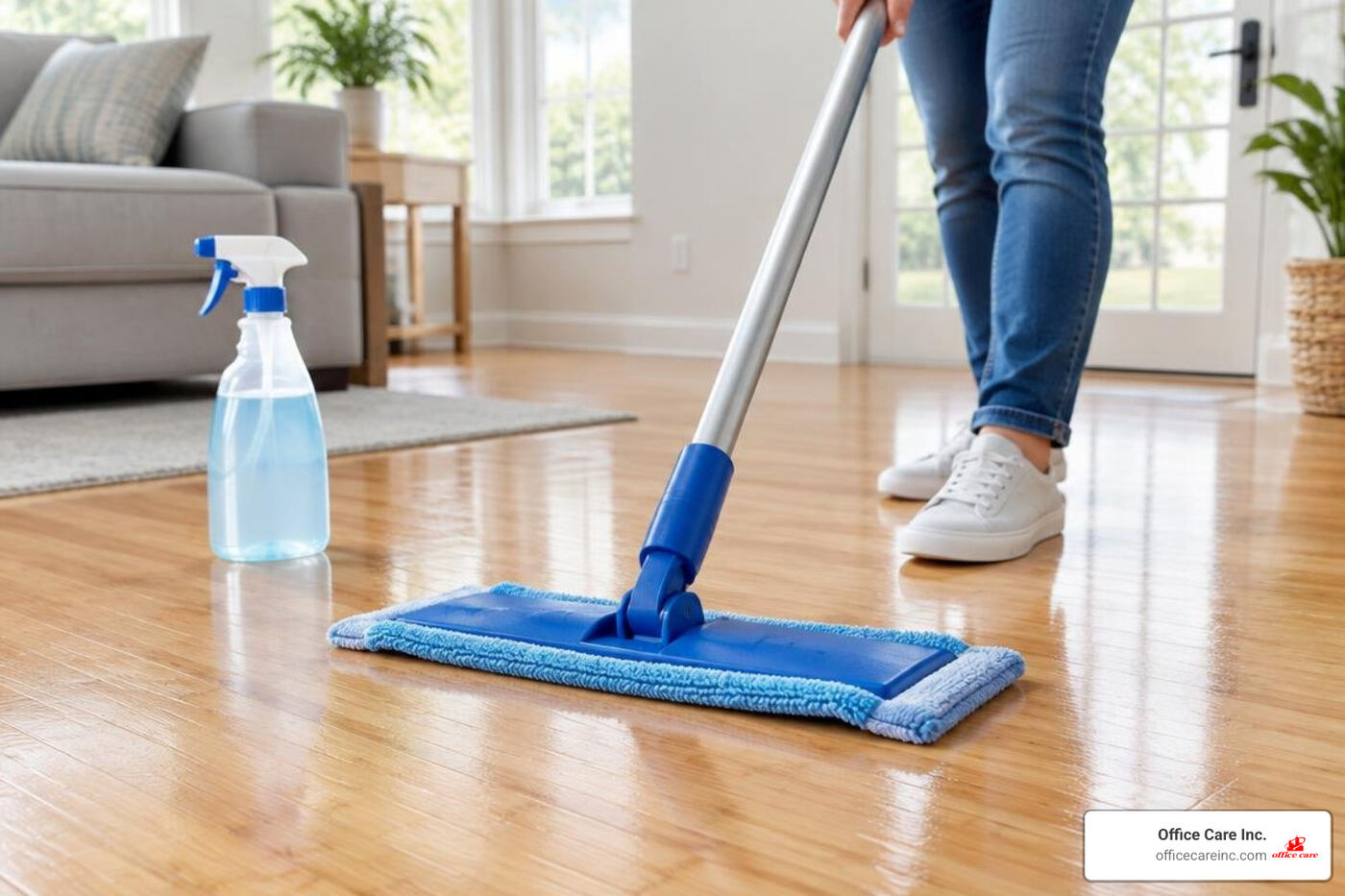
When performing a deeper weekly clean, always follow manufacturer Care & Maintenance protocols:
- Never use a soaking wet mop: Traditional string mops dipped into full buckets of water dump excessive liquid onto the surface.
- Use the mist-and-wipe method: Lightly mist a pH-neutral cleaning solution directly onto a microfiber pad or sparingly onto the floor in small sections.
- Mop in small zones: Work in manageable areas, wiping in the direction of the natural grain.
- Dry immediately: If any moisture remains visible on the floor for more than 60 seconds, run a dry microfiber towel over the section immediately.
Periodic Deep Cleaning and Polish Schedules
Over time, foot traffic inevitably tracks in oils, airborne pollutants, and light grime that regular dusting cannot lift. Periodic maintenance helps revive the finish before microscopic scratches break through to the raw material.
Applying a specialized bamboo floor polish or refresher every 2 to 6 months in busy commercial areas—or every 6 to 12 months in residential rooms—replenishes the protective barrier. Before applying any finish restorer, the floor must be completely free of debris. When handling facility-wide restorations, our teams rely on commercial floor deep cleaning protocols that incorporate non-abrasive white polishing pads to evenly distribute protective coatings without abrading the factory topcoat.
Safe vs. Damaging Cleaning Products and Methods
Using the wrong cleaning agent can strip factory sealants in minutes, voiding your warranty and leaving the floor vulnerable to rapid deterioration. Safe care requires products formulated to clean gently without leaving behind harsh residues or corrosive acids.
Safe Cleaning Solutions for Bamboo Floor Care
Bamboo floors are best served by plant-based, pH-balanced formulas that break surface tension without attacking the urethane finish. Using certified green cleaning methods and adhering to EPA-approved cleaning guidelines ensures your cleaning agents are non-corrosive, non-toxic, and free of harsh petroleum distillates.
Safe cleaning practices include:
- pH-Neutral Hardwood and Bamboo Cleaners: Ready-to-use spray formulas formulated specifically for sealed wood surfaces.
- Mild Hydrogen Peroxide Solutions: Specially formulated, low-concentration floor cleaners for lifting organic soil without bleaching the wood grain.
- The "Sacrificial Plank" Test: When trying a new cleaning agent, always test it first in an inconspicuous area (such as inside a closet) or on a leftover installation plank to confirm it dries without dulling, hazing, or leaving streaks.
Methods to Avoid: Steam Mops, Vinegar, and Harsh Chemicals
Several common household cleaning hacks are disastrous when used on bamboo:
- Steam Mops: Steam cleaners force superheated moisture deep into the microscopic pores and seams of the flooring. The combination of intense heat and moisture causes rapid adhesive breakdown, cupping, and irreversible board warping.
- Vinegar and Citrus Cleaners: While often touted as natural cleaners, vinegar is acetic acid. Over time, acidic solutions corrode the protective polyurethane topcoat, leaving the floor cloudy and vulnerable to stains.
- Ammonia and Bleach: These harsh chemicals strip color from the planks, degrade factory finishes, and leave permanent discoloration.
- Paste Waxes and Oil Soaps: These products create a sticky residue layer that attracts dirt, turns cloudy, and makes future refinishing impossible without aggressive chemical stripping.
Environmental Controls and Scratch Prevention Strategies
Because bamboo is hygroscopic, it naturally absorbs and releases moisture based on the ambient atmosphere. Controlling the surrounding indoor environment is just as vital as daily sweeping.
According to the General Floor Care Maintenance Guide, stable environmental conditions are essential for preventing floor movement. Indoor relative humidity should be maintained between 40% and 60% year-round (or 25% to 45% in arid desert climates), with ambient temperatures kept between 60°F and 80°F. If relative humidity drops below 35%, bamboo planks can shrink and separate; if humidity rises above 60%, planks can swell and cup. Use dedicated HVAC controls, humidifiers in the winter, and dehumidifiers in the summer, monitoring your space with a digital hygrometer.
Essential Bamboo Floor Care Habits for High-Traffic Zones
Preventing surface abrasions requires strategic defensive measures throughout your space:
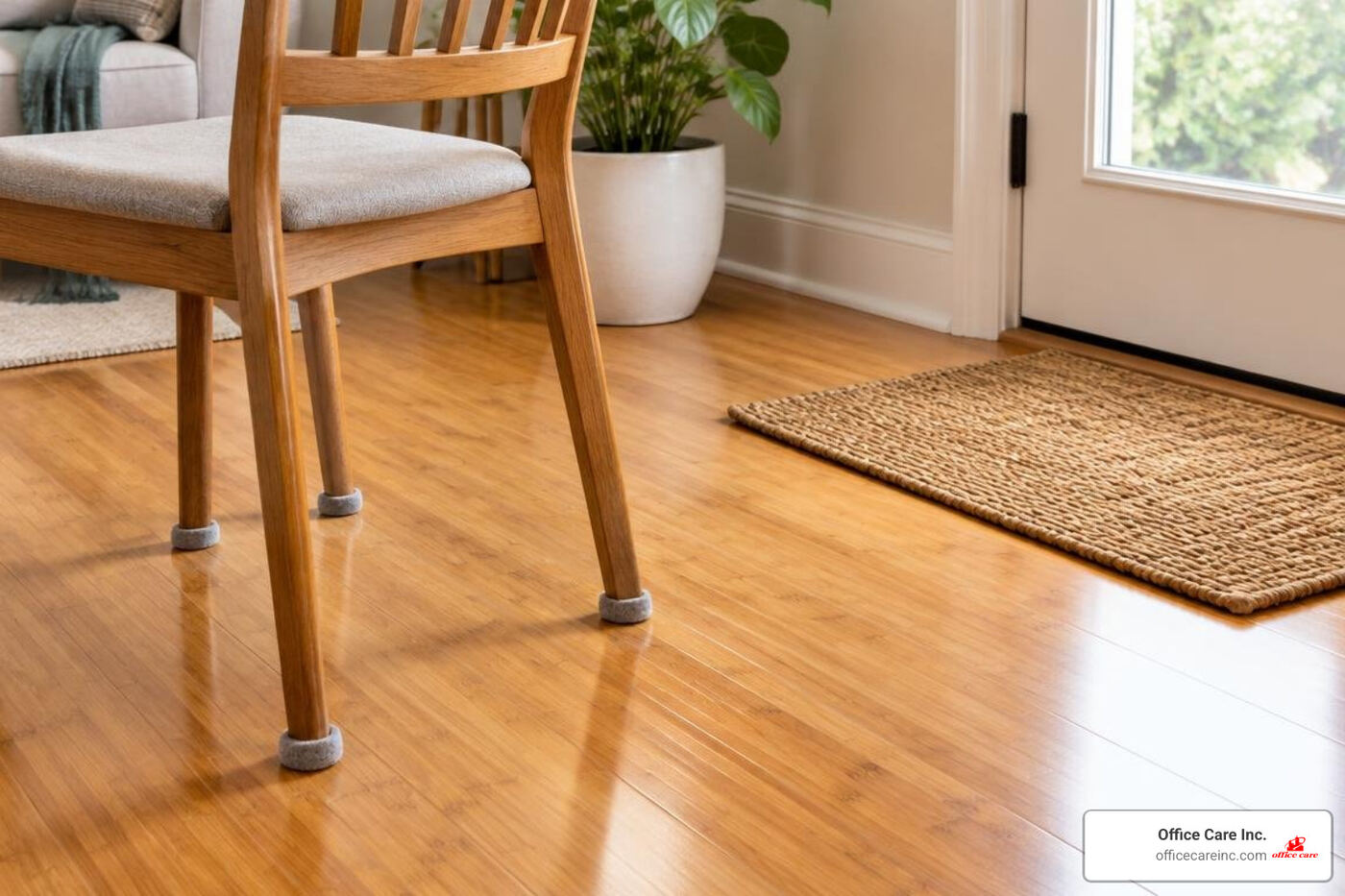
- Place High-Quality Walk-Off Mats: Position dirt-trapping mats outside and inside every exterior entrance. Ensure rugs are made with breathable backings; avoid solid rubber or PVC backings that trap moisture against the floor.
- Install Heavy-Duty Felt Protectors: Affix thick felt pads to the legs of all chairs, tables, and desks. Check and clean these pads regularly, replacing them when they become embedded with dirt.
- Use Polycarbonate Chair Mats: Under rolling office chairs, install non-studded mats designed specifically for hard surface floors to distribute wheel weight evenly.
- Manage Pet Claws: Keep pet nails trimmed to prevent deep gouges in high-traffic hallways.
- Block Harsh UV Sunlight: Direct sunlight causes natural bamboo to fade or shift in color over time. Install UV-filtering window films, blinds, or sheer curtains across sun-drenched windows.
For facilities that need comprehensive surface upkeep across multiple flooring materials, integrating our specialized hardwood floor care services ensures consistent protection across all hard surfaces.
Repairing Minor Scratches, Scuffs, and Water Stains
Even with careful preventative habits, everyday use will eventually cause minor marks. Fortunately, most surface issues can be corrected without replacing planks:
- Light Scuff Marks: Rubber shoe heel scuffs can often be removed by applying a drop of pH-neutral cleaner to a soft microfiber cloth and gently rubbing the area until the transfer lifts.
- Fine Surface Scratches (White Lines): Light scratches in the polyurethane clear coat can be buffed out using a white, non-abrasive polishing pad paired with a specialized wood finish restorer.
- Deeper Scratches and Minor Chips: For marks that penetrate past the clear finish, use a color-matched wax repair stick or wood filler crayon. Clean the void, press the wax firmly into the scratch, and buff away the excess with a clean cloth.
- Surface Water Rings (White Haze): When moisture is caught in the top finish, applying a tiny drop of mineral oil or real mayonnaise (due to its gentle oil-binding properties) to a cloth, buffing the spot, and wiping clean can draw out the trapped moisture.
Frequently Asked Questions About Bamboo Flooring Maintenance
Can you use a steam mop or vinegar on bamboo floors?
No. Never use a steam mop or vinegar on bamboo flooring. Steam cleaners inject pressurized steam into the micro-gaps between planks, resulting in thermal shock, moisture absorption, adhesive breakdown, and board warping. Vinegar is an acid that slowly dissolves the polyurethane clear coat, leaving the surface dull, cloudy, and unprotected.
What is the ideal indoor humidity and temperature for bamboo flooring?
The ideal indoor humidity range for bamboo flooring is between 40% and 60% relative humidity, with indoor temperatures maintained between 60°F and 80°F. Keeping a digital hygrometer on-site allows you to adjust HVAC systems, humidifiers, or dehumidifiers to prevent seasonal expansion, contraction, and board separation.
Is carbonized bamboo cleaned and maintained differently than natural bamboo?
Carbonized bamboo is cleaned using the same pH-neutral, low-moisture methods as natural bamboo, but it requires extra care. The carbonization process uses high heat and pressure to caramelize the natural sugars inside the bamboo, producing a warm, rich amber color. However, this heat treatment can make the material up to 30% softer than natural bamboo, leaving it more susceptible to scratching and denting from heavy furniture and high heels.
Conclusion
Bamboo flooring combines natural beauty, impressive hardness, and sustainable design. However, preserving its smooth finish over decades requires intentional maintenance habits: sweeping away abrasive grit every day, using barely damp microfiber mops, avoiding steam cleaners and acidic chemicals, and maintaining steady indoor humidity.
Managing expansive floor plans and delicate surfaces across commercial offices, schools, and healthcare facilities demands a structured approach. At Office Care Inc., we deliver customized commercial floor maintenance throughout Maryland, Washington, D.C., and Northern Virginia. Our EPA-approved, 24/7 cleaning programs and trained technicians protect your flooring investments, ensuring your facilities remain safe, clean, and welcoming every single day.